This report offers only a brief glimpse into one part of the Saudi landscape and the seven figures discussed here. To tell every part of these stories in full, with every decision, transaction, institution, person and consequence, would take millions of pages. What follows identifies the questions and records at the heart of that much larger investigation.
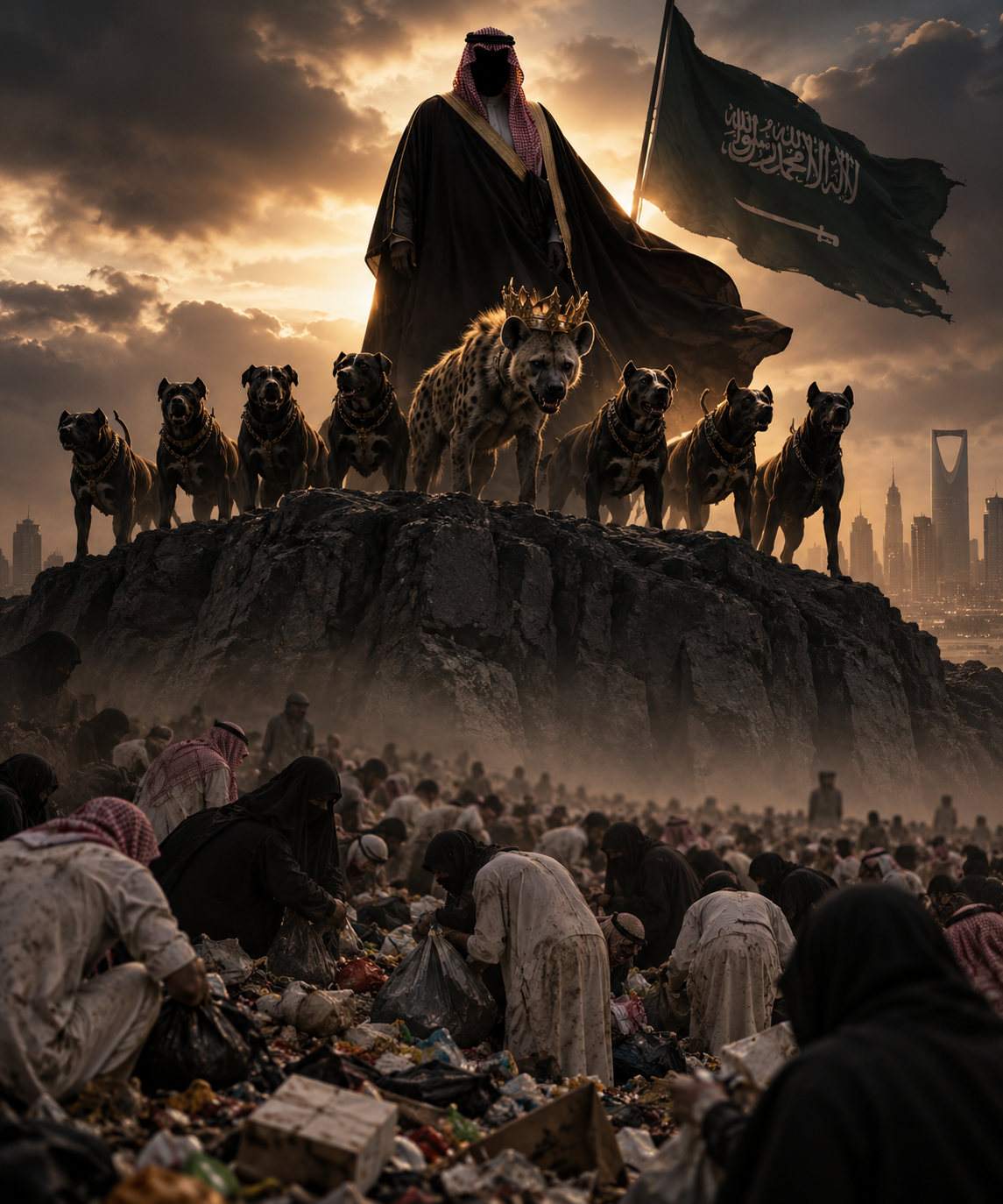
Why “The 7 Dogs”? We chose the title as a satirical metaphor, not to disparage dogs. Dogs are known for loyalty to their owners and a readiness to defend them. The title also refers to the film 7 Dogs, based on a story by Turki Alalshikh and featuring international actors. We borrow its name to ask: To whom do these seven influential men owe their loyalty when pleasing the decision maker conflicts with a citizen’s right to know where the money went? The title expresses an editorial position; the conduct of each person must be assessed through documents, not metaphor.
In the public structure, Crown Prince Mohammed bin Salman is Prime Minister and chairs the Board of Directors of the Public Investment Fund. But naming the officeholder does not answer this investigation’s question: Who proposes a decision, who can change it, who signs off on spending, who receives the return, and who bears the loss? PIF states that its board, chaired by the Crown Prince, oversees strategy, investment policy and performance, while executive management and its committees review activities and proposals. This chain of responsibility should be traced from the first recommendation to the last payment.
The image of The 7 Dogs lends this investigation its satirical language: seven men operating in the spheres of money, security, media and entertainment, with managers, advisers and contractors behind each of them. The “foreign hyena” is not an unidentified figure to the author of this investigation. According to records described by the author, reports concerning this person were received by Saudi intelligence more than a year ago, and a report was also received by Saudi Foreign Minister Faisal bin Farhan. The author further states that the matter was discussed with Saudi Arabia’s Oversight and Anti-Corruption Authority, Nazaha, which closed the matter quickly. The questions to the authorities are therefore specific: Who assessed the reports after receipt, what findings were recorded, why did Nazaha close the matter, and what authority does the foreign individual exercise over decisions affecting public money?
The money that is visible and the journey that is not fully disclosed
The 2026 budget estimates that total public debt will rise from SAR 1.457 trillion in 2025 to SAR 1.622 trillion in 2026. The budget statement indicates that domestic debt accounts for about 63% of the debt portfolio; the total therefore cannot all be described as external debt. Rising debt raises questions about financing costs and spending priorities, but does not by itself prove waste or show that money reached particular people.
Meanwhile, PIF reported USD 913 billion in assets under management at year-end 2024 and disclosed an average annual total portfolio return of 7.2% since 2017. These are important figures, but they do not show the result of each deal. Assets transferred by the state, capital injected into the fund, borrowed money and profit earned through investment are different things. The Yasir Al-Rumayyan file therefore calls for a record that separates those sources and shows, for each investment, the original amount, further funding, fees, current value, cash returned and the person who decided whether to continue or stop.
When a citizen speaks about the strain of living costs, the size of a portfolio or the attendance at an event is not a sufficient answer. The testable questions are: How many lasting Saudi jobs did each project create? What are their wages? How much of the contract value remained in the Kingdom? Who received management and advisory fees and commercial rights? The General Authority for Statistics publishes data on household income and expenditure. Those figures can be examined alongside project costs and outcomes. The seven files do not measure whether all Saudis live in poverty, or establish that foreigners generally earn more than Saudis doing comparable work. The data needed to test those claims should be disclosed rather than replaced with impressions.
Where do decisions meet financial returns
At the Public Investment Fund, the questions go to the board, the governor and the international investment officials together. The Al-Rumayyan and Alnowaiser files examine investments including Lucid, Magic Leap and SoftBank, and distinguish portfolio oversight from personal approval of a specific deal. Every major decision needs an investment recommendation, an approval record, valuation assumptions, a performance review and an explanation for any further funding after difficulties emerged. PIF describes Turqi Alnowaiser as Deputy Governor and Head of International Investments, as well as Chairman of Lucid. Those roles make the limits of his authority, information flows and potential conflicts precise questions requiring precise answers.
In entertainment and sport, the Turki Alalshikh file poses another test: What is the net cost of each season or event after ticket, sponsorship and broadcast-rights income? Who owns the commercial rights, who negotiated the contracts, and were audited accounts published? Attendance is a meaningful figure, but it does not by itself show how much public bodies paid or recovered. If commercial contracts intersect with the private interests of decision makers, the answers lie in contracts, valuations and declarations of interests.
In security and technology, the Musaed Al-Aiban file asks about the overlap of security and regulatory oversight with technology companies obtaining government work, and about conflict-of-interest controls when relatives of an official have business interests. The Khalid Al-Humaidan file asks about authorization, spending and review within intelligence bodies. Some sensitive operational details may properly remain unpublished; that makes independent scrutiny of money, decisions and responsibility more necessary.
In media, the Royal Court and private-office circles, the Saud Al-Qahtani file asks who could contract and spend on behalf of a media center, while the Bader Al-Asaker file traces the boundary between official status and private companies and assets. In Al-Qahtani’s case there is a documented action that must be attributed precisely: the U.S. Treasury announced sanctions against him in 2018 and described his role, according to its assessment, in the operation that led to Jamal Khashoggi’s killing. Those sanctions do not turn every other allegation in the file into an established fact. They do make scrutiny of his authority and the oversight applied to it unavoidable.
Are they above the law
The files do not prove that the seven men form a single organization, take orders from a foreign leader or personally appropriated billions of dollars. Across separate files, however, they present offices with wide authority, major sums and deals, and questions the published information does not settle. If nobody is above the law, the records capable of answering the following questions should be opened:
- Who recommended, approved and signed each decision?
- Who disclosed interests, and who recused himself when interests conflicted?
- Who received advisory, management and intermediary fees and commercial rights?
- Who reviewed a project’s result years after it was announced?
- What happened when a substantial loss or a violation emerged?
These questions are directed not only to the seven individuals, but also to boards, ministries, oversight bodies and contractors. A citizen asked to await the benefits of long-term investment while public debt rises is entitled to know what money was spent, under what authority, where it went and what came back. That practical test, rather than an image of a mountain, a hyena or seven dogs, can show who actually controls decisions.
The seven figures ranked by the question each raises
This is an editorial ranking based on the reach of each office and file in the matter of money and influence. It is not a ranking of accusations or proof of wrongdoing.
1- Turki Alalshikh
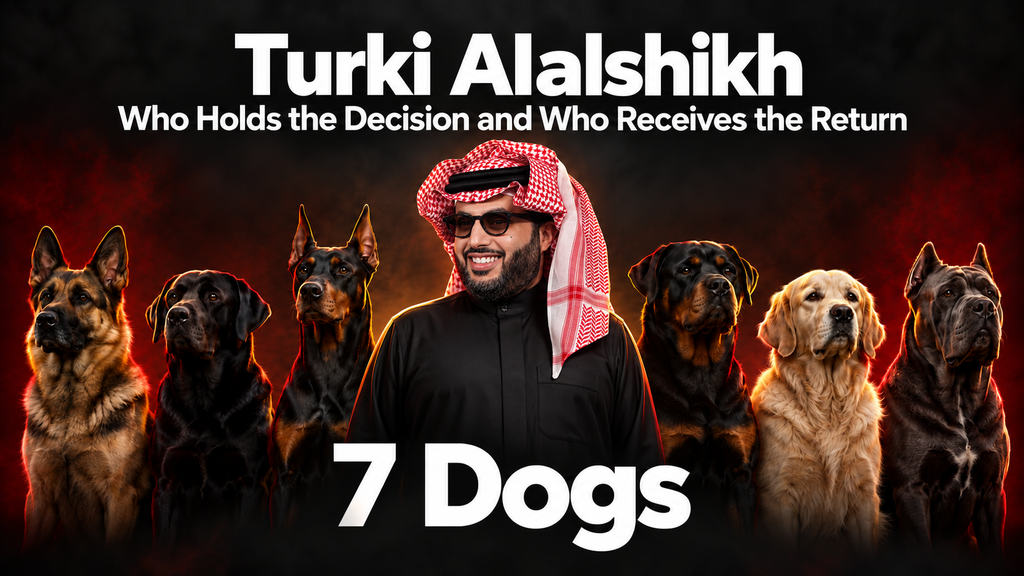
He is the architect of the most massive project of moral corruption—one aimed at stripping the Saudi people of their customs and traditions—and his file is the most dangerous of all, as it erodes the sense of belonging to the land.
| Chairman of the General Entertainment Authority; his file covers entertainment seasons, sports and commercial rights, and past football-club interests. | Where are the audited accounts showing each event’s costs, revenues and beneficiaries? |
Read more
2- Yasir Al-Rumayyan
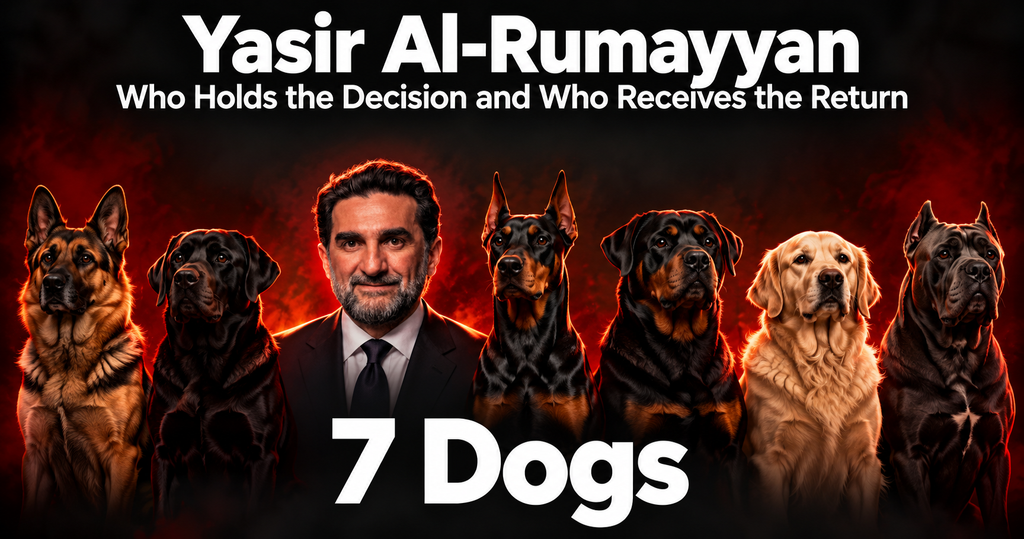
| Governor of PIF and a principal figure in its portfolio, companies and investment relationships. | How can returns generated by management be distinguished from state-transferred assets, state capital injections and fund borrowing? |
Read more
3- Musaed Al-Aiban
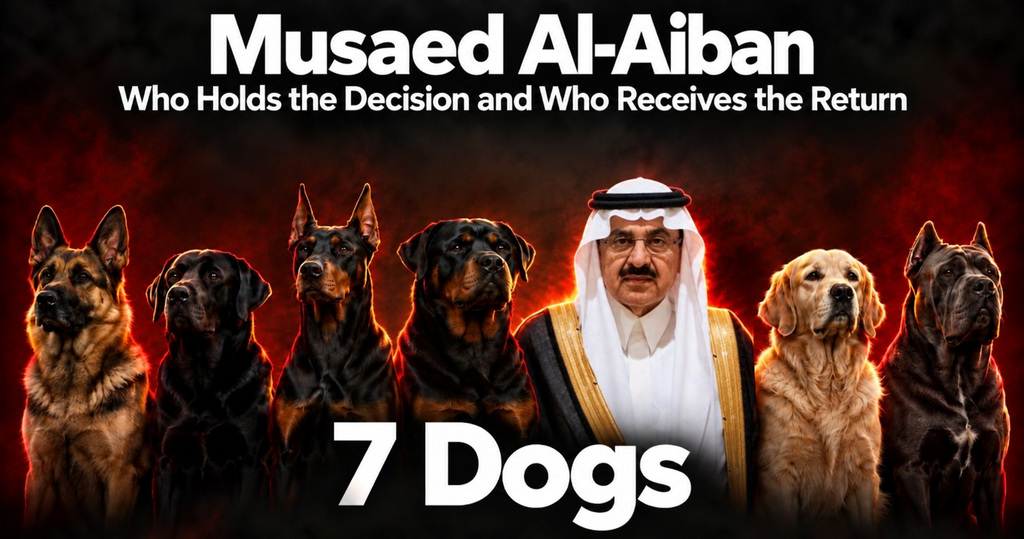
| A Minister of State with a long presence in political and security circles; his file addresses cybersecurity oversight, family interests and contracts. | Who monitors conflicts of interest and the boundary among the regulator, the company and the contractor? |
Read more
4- Khalid Al-Humaidan
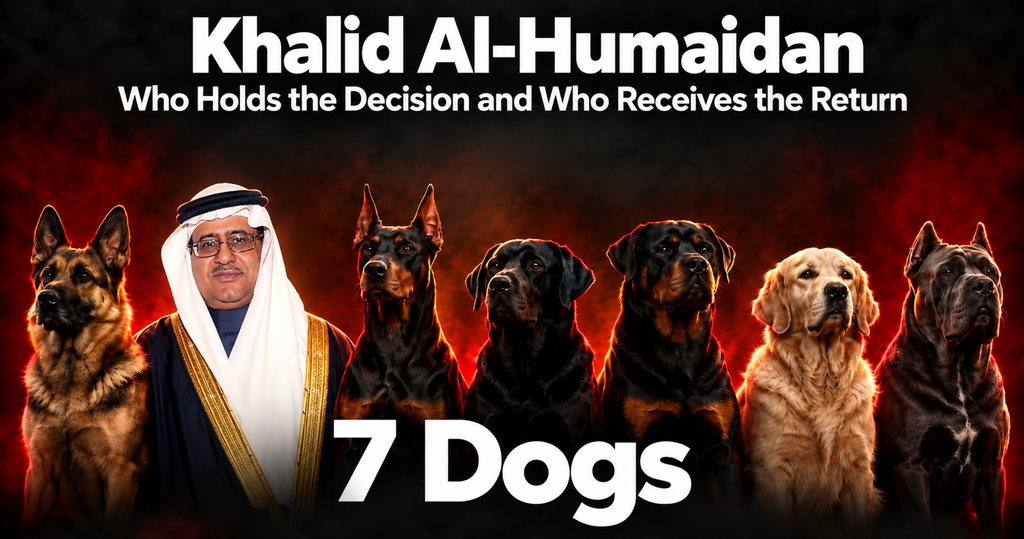
| President of General Intelligence during the period examined in his file, with an earlier career in domestic security bodies. | How were spending and operations approved, and who reviewed outcomes and responsibilities within the agency? |
Read more
5- Turqi Alnowaiser
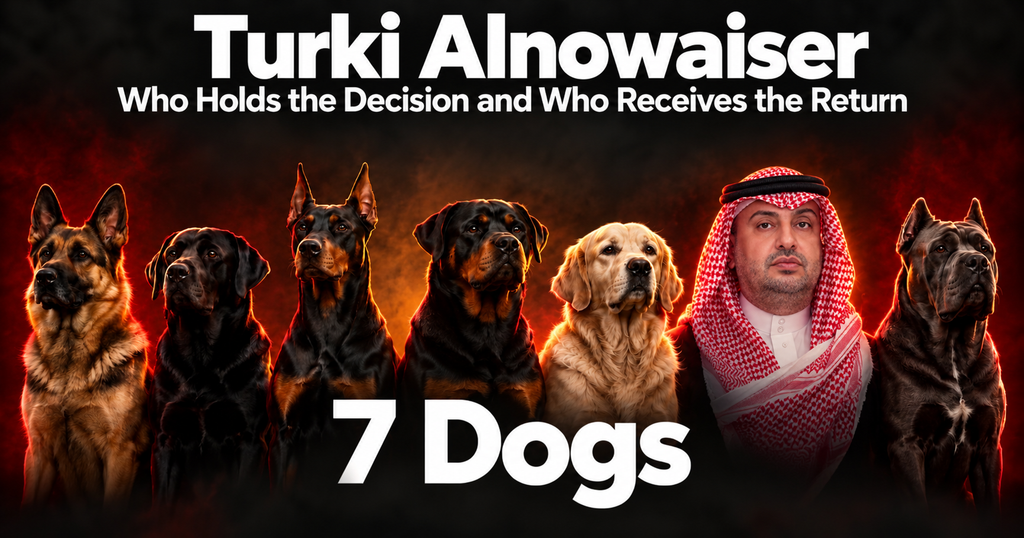
| PIF Deputy Governor and Head of International Investments, with portfolio-company board roles, including chairmanship of Lucid. | For every troubled investment, where did his recommendation end, where did approval authority begin, and what did he recommend after losses appeared? |
Read more
| 6- Bader Al-Asaker |
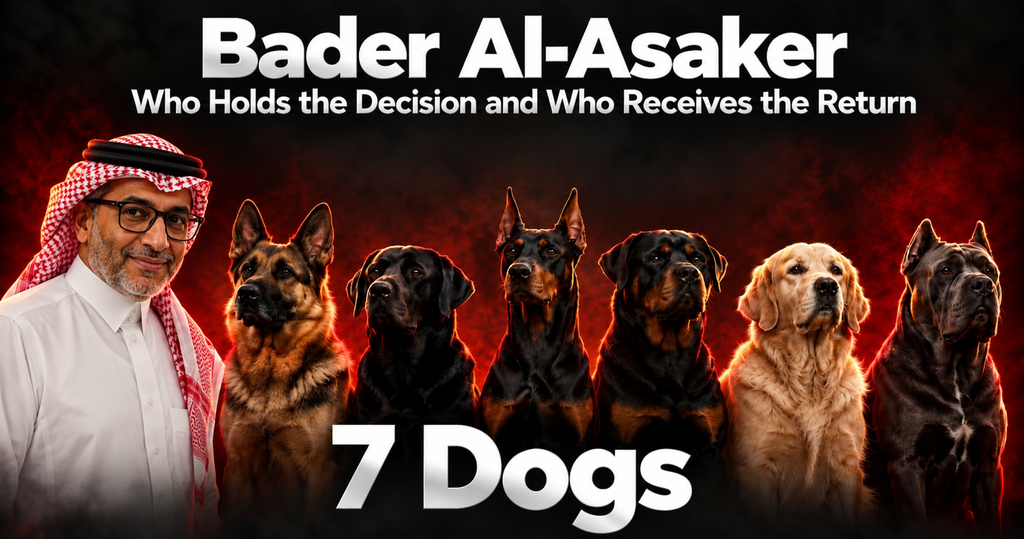
| Associated with Misk and appointed Director of the Crown Prince’s Private Office for Private Affairs; his file traces companies, assets and cross-border links. | Where are the documented boundaries between official duties and private interests and structures? |
Read more
| 7- Saud Al-Qahtani |
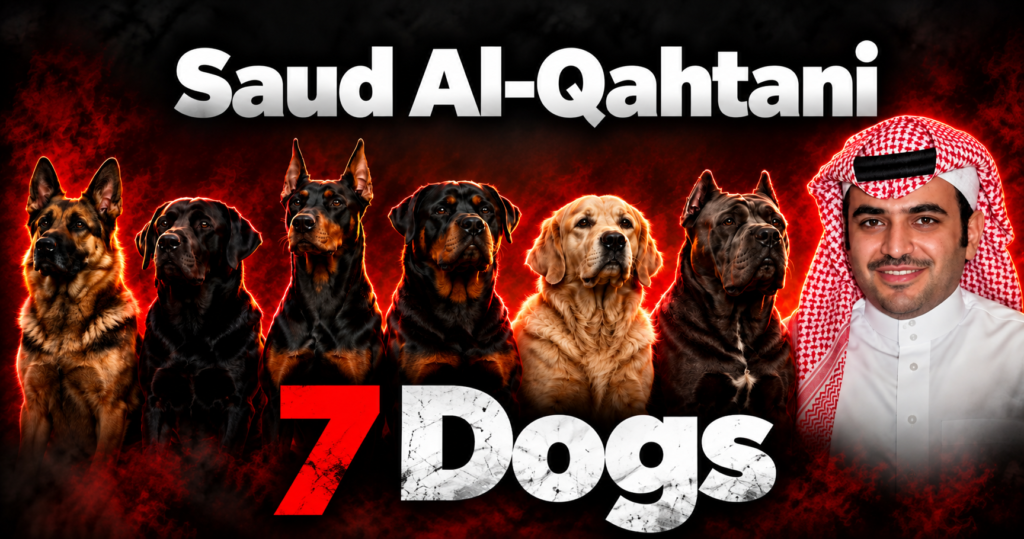
| A former Royal Court adviser linked to the Center for Studies and Media Affairs; his file addresses media contracts and U.S. sanctions related to the Khashoggi case. | Who financed and approved contracts, and what oversight applied to the center and those who controlled it? |
Read more
Final question:
Dogs are known for loyalty to their owners. A public officeholder, however, must answer not only to the person who appointed him, but also for the money he manages and the people who are supposed to benefit from it.
Sources for the shared report
PIF Board approval of the 2026–2030 strategy: https://www.pif.gov.sa/en/news-and-insights/press-releases/2026/chaired-by-hrh-crown-prince-pif-board-of-directors-approves-pif-2026-2030-strategy/
PIF leadership and governance: https://www.pif.gov.sa/en/who-we-are/our-leadership/
Saudi Ministry of Finance 2026 budget statement: https://www.mof.gov.sa/en/budget/2026/BudgetStatementDocs/Eng_2026.pdf
Saudi Ministry of Finance budget announcement: https://www.mof.gov.sa/en/MediaCenter/news/Pages/News_02122025.aspx
PIF 2024 results announcement: https://www.pif.gov.sa/en/news-and-insights/press-releases/2025/pif-continued-to-drive-the-economic-transformation-of-saudi-arabia-while-shaping-global-economies-in-2024/
Saudi General Authority for Statistics 2023 Household Income and Consumption Expenditure Survey: https://www.stats.gov.sa/en/statistics-tabs?category=127329&tab=436312
U.S. Treasury sanctions announcement: https://home.treasury.gov/news/press-releases/sm547
Film credit reference: https://en.wikipedia.org/wiki/7_Dogs