

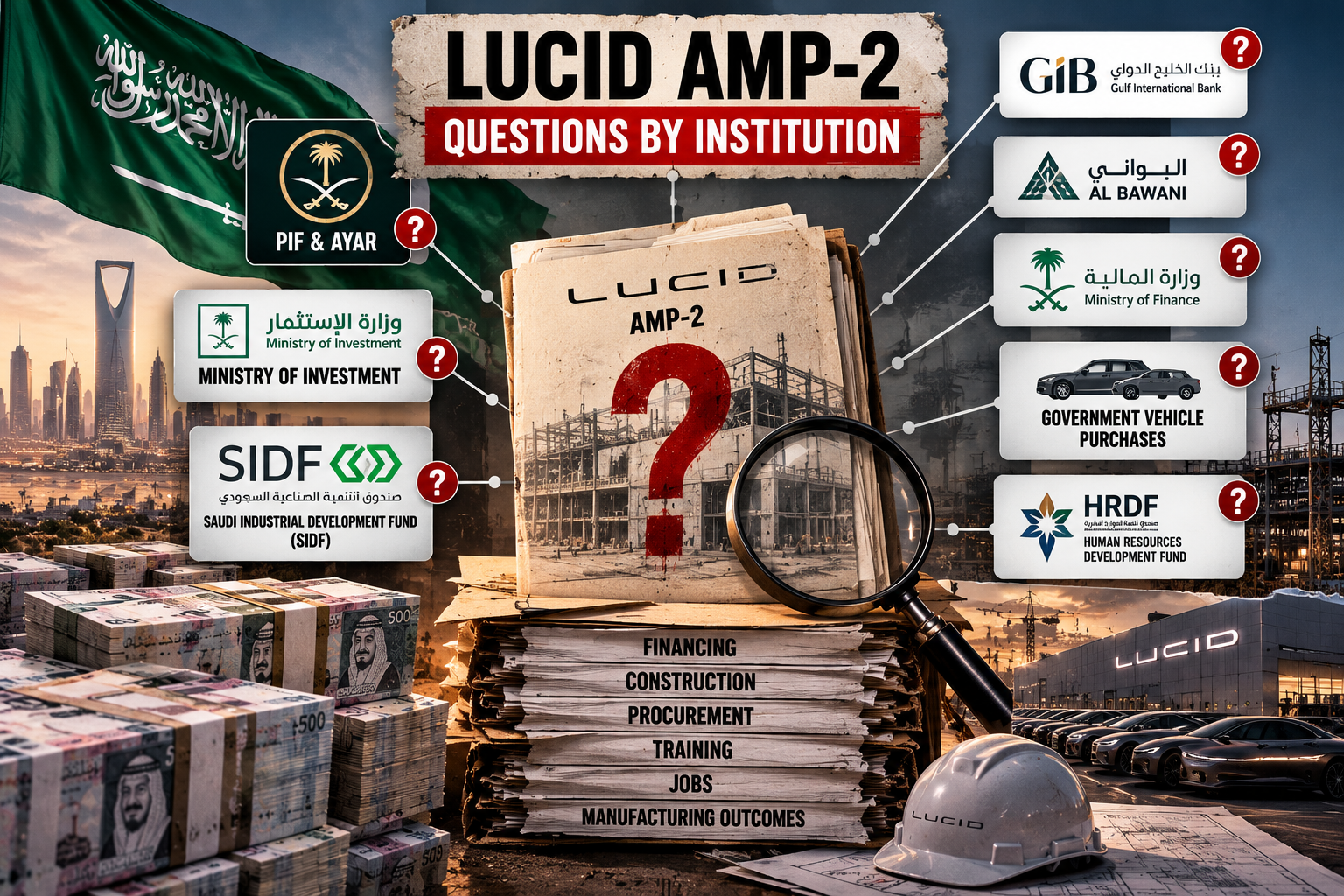
Lucid AMP 2 Questions by Institution
Independent question set on Saudi industrial financing, construction, procurement, training, and manufacturing outcomes.
These are proposed questions for each institution. Their inclusion does not mean they have already been sent or answered.
To PIF and Ayar
1. What is the consolidated Saudi cost of AMP-2 after separating PIF investments, government support, bank loans, and vehicle purchases?
2. Did PIF compare support for Lucid’s AMP-2 with other ways to establish domestic vehicle manufacturing? What did its analysis conclude?
3. What measurable targets did PIF set for Saudi jobs, local components, engineering, exports, and fully manufactured vehicles?
4. Who reviewed and approved the related-party contracts with Al Bawani and the financing and property entities? Were any decision-makers recused?
5. How did PIF assess the Saudi government purchase agreement when valuing Lucid and approving further financing?
To the Ministry of Investment
6. How much AMP-2 support was approved and actually paid each year since 2022?
7. How does the ministry reconcile SAR 366 million in 2023 cash support with the $127.5 million asset-note disclosure?
8. What construction start date governs the 30-month and 55-month periods, and what precisely is the agreed scope of operations?
9. Which milestones were assessed, and has support ever been suspended or a default notice issued?
10. What quantitative standard defines material and chronically low utilization, and has the ministry assessed AMP-2 against it?
11. How would the fair market value and unamortized support amount be calculated if the ownership-transfer or repayment provisions were invoked?
To SIDF
12. Has any amount ever been drawn from the SAR 5.19 billion facility? If so, when and how much was repaid?
13. If no amount was drawn, was that because no funds were needed, conditions were unmet, or the financing plan changed?
14. What assets secure the facility, and were its conditions amended after the forecast for full production changed?
15. How does SIDF measure the industrial purpose of the facility while the current operation assembles imported kits?
To Gulf International Bank
16. How was the SAR 1.89 billion outstanding at June 30, 2026 used between AMP-2 and general operations?
17. What collateral or guarantees support the debt? Has a Saudi public entity directly or indirectly guaranteed it?
18. Who approved raising the facility to SAR 1.9 billion, and on what repayment forecasts?
To Al Bawani and Lucid
19. What are the scope, original price, changes, delivery dates, and acceptance criteria of each design and construction contract?
20. Was Al Bawani selected through competitive procurement? Who participated and who approved related-party prices?
21. How much of the SAR 2.56 billion incurred had actually been paid, and how much remained payable or disputed?
22. What work was independently accepted, and what is the remaining cost and funding plan for CBU production?
23. How did actual cost and schedule compare with the 2022 plan, and who bears overruns or delay risk?
To the Ministry of Finance and vehicle beneficiaries
24. How many vehicles were ordered, delivered, accepted, and paid for each year, by each purchasing entity?
25. What was the price of each configuration, including transport, assembly, servicing, software, and warranty?
26. What was the origin and Saudi value-added share of each delivery batch?
27. How were Lucid prices compared with electric vehicles meeting the same government requirements?
28. Why were pricing and annual volumes redacted from the public agreement, and can non-confidential price bands and performance indicators be disclosed?
29. How are the purchased vehicles used, and what are their operating and maintenance costs?
To HRDF and Lucid
30. How many Saudi nationals received reimbursed training, and how many completed it?
31. How many trainees obtained permanent jobs, in which roles, and how many remained after one and two years?
32. What total reimbursements were actually paid under the two agreements?
33. How does actual employment compare with the 2022 forecast of more than 4,500 jobs, and what timetable now governs that target?

